
7for7 Series Part 6: Mali, Eritrea, Guinea, Mauritania, Niger, Namibia & Malawi
Do you remember the largest producer and exporter of cocoa beans, the city once nicknamed the ‘Paris of West Africa,’ the country with the continent’s largest coastline or the world’s biggest population of elephants?
You can catch up on these in our previous installment of the series, now it’s time for the next seven countries.
Mali
This landlocked West African nation which is home to about 20 million people which include the “Golden Voice of Africa,” the celebrated singer-songwriter, Salif Keita.
Talking about distinguished individuals, Mansa Musa, who’s believed to be the wealthiest man to ever live, was the king of the Mali Empire between 1280 to 1337.
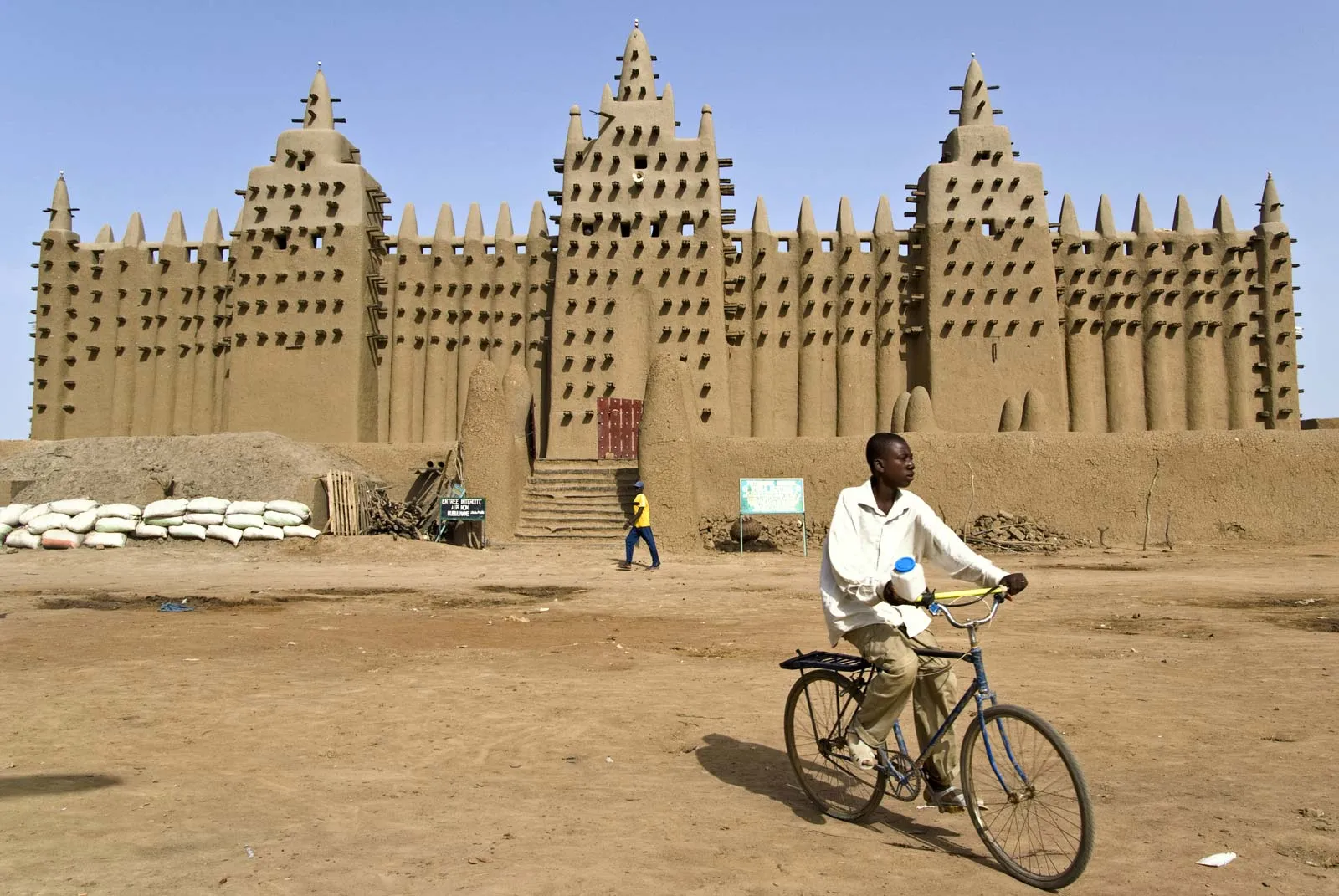
When it comes to architecture, Mali’s Great Mosque of Djenné constructed in 1907, is the largest mud-brick building in the world. Its walls are maintained annually by the Djenné people in a festival called Crépissage (Plastering). There’s also the UNESCO-listed Cliff of Bandiagara, a 150 km sandstone cliff home to the Dogon people’s 289 villages.
Eritrea
The East African nation is inhabited by close to 6 million people and together with Djibouti, Somalia and Ethiopia form a region called the Horn of Africa.
The name Eritrea comes from the ancient Greek words, “Erythra Thalassa,” which mean Red Sea, a major body of water on the country’s borders. The capital city’s name, Asmara, which means “they [women] made them unite,” is a subject of oral tradition. It is said that the women of Asmara’s four regions persuaded their men to unite and defeat a common enemy. The Fiat Tagliero, a service station in the capital, was designed in the shape of an aeroplane.
At least 25% of the whole army was made up of tens of thousands of Eritrean women who fought alongside their male counterparts during the war for independence.
Guinea
Four nations in the world have the word Guinea in their name. Of the three found in Africa, Guinea is French speaking, Guinea-Bissau is Portuguese speaking and Equatorial Guinea’s language is Spanish.
Singer-songwriter Mory Kanté, whose 1987 single became the first African song to sell over a million copies is from the West African nation.
The Nimba Mountains of Guinea, are a site where chimpanzees were first observed using tools to cut food and reduce it to smaller chunks in 2009. In 2017, a new species of tree called Talbotiella cheekii which can grow up to 24m was discovered in the nation.
It’s believed that about 80% of Guineans primarily consult traditional healers to get remedies for sickness and ailments.
Mauritania
Officially known as the Islamic Republic of Mauritania, the North Western country is home to about 4 million people. Approximately 90% of the nation is covered by the Sahara Desert.
Apart from being notoriously known as the last country to abolish slavery in 1981, Mauritania has the largest ship graveyard in the world close to the city of Nouadhibou.
In 2001, reserves of potentially 120 million barrels of oil were discovered in the country and in 2019, an estimated 50 trillion cubic feet of natural gas reserves were also discovered. This gas equivalent of 8.9 billion barrels of oil makes Mauritania one of the world’s largest sites of such a discovery.
Not only the fossil fuels, the “Iron-ore Train” or “Train du Desert” which is usually 2.3km long found in one of the country’s mines, is one of the longest trains in the world.
Niger
Not to be confused with Nigeria, Niger is one of the hottest countries on the continent whose approximately 80% land area is covered by a desert.
The name Niger, comes from the local words “Ni Gir” which mean “River Gir,” in reference to the Niger river that passes through the south-western part of the country. The West African nation is the world’s sixth-largest producer of uranium and is also home to largest known animal carvings in the world. The 7,000-10,000 years old Dabous Giraffe Petroglyph, which is as big as two living giraffes, is an example of such carvings.
A 27m-high miranet known as the Grand Mosque in Niger’s Agadez, is the largest structure in the world made entirely of mud-brick.
Malawi
The landlocked Southern African nation is home to over 21 million people. Formerly known as Nyasaland before attaining independence, Malawi is a major tobacco exporter accounting for close to 70% of the country’s total exports.
The world’s fourth-largest freshwater lake by volume, Lake Malawi which is found in the country, is home to hundreds of fish species which are all nearly endemic. Because it is 365 miles long and 52 miles wide, Lake Malawi is sometimes referred to as the “calendar lake.”
In 2013, former President Joyce Banda, infamously sold the presidential jet for $15 million to help the country’s struggling economy.
Namibia
The Southern African nation is home to an estimate of only 3 million people. Home to one of the world’s oldest deserts, the Namib desert, the nation is blessed with unique and breathtaking landscapes.
Some of the world’s highest sand dunes are found in Namibia and so is the second-largest canyon in the world. Flight of the Phoenix, Mad Max: Fury Road, 2001: A Space Odyssey and Samsara are some of the blockbuster films which were shot in the Namib desert.
The world’s largest underwater lake, “Dragon’s Breath Cave,” which sits at around 100m below the surface is also found in the country, as is the largest population of free-roaming cheetahs, over 3,000 of them.
Ready for the next one?
We’ve now covered six of the eight episodes in this series. Which countries do you want us to feature next?

All Categories
Recent Posts


